Cayo Largo, Cuba

Home About Weather Photos & videos Contact us
Hotels
Beaches
Excursions
To do / To see
Naturism
Français

Cayo Largo ...

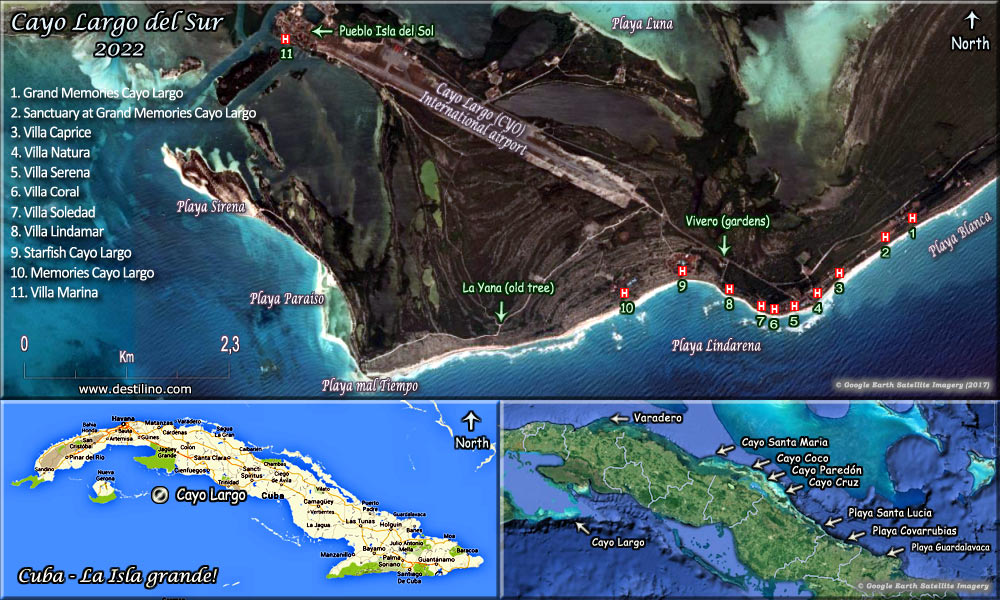
is a small islet located at the southeastern end of the Canarreos archipelago (which belongs to Cuba). The islet is approximately 80 km South of the main island of Cuba. This small limestone island is 28 km long and no more than 3 km wide. Fine white sand beaches stretch through out the south coastline for more than 20 km. The north coast is mostly mangroves and saltpans.

Cayo Largo has no permanent residents, except for the birds and iguanas of course! :-) Cubans stay on Cayo Largo only to work in the hotels. They work for 20 days, then go back to their families at Isla de la Juventud or the main Island of Cuba for the rest of the month. They live in small appartments at the only village on Cayo Largo called « Isla del Sol ».

Cayo Largo now boasts a new modern international airport where Canadian, European, and South American aircrafts can now land directly. The Hotels are all located inside a 5 kilometers length on the south coastline. The rest of the island is uninhabited. There is only one main paved road which connects the village (marina), the airport and the hotels. There are also secondary roads which are mostly sandy trails.

Note the hotels are located within 10 minutes of the airport.

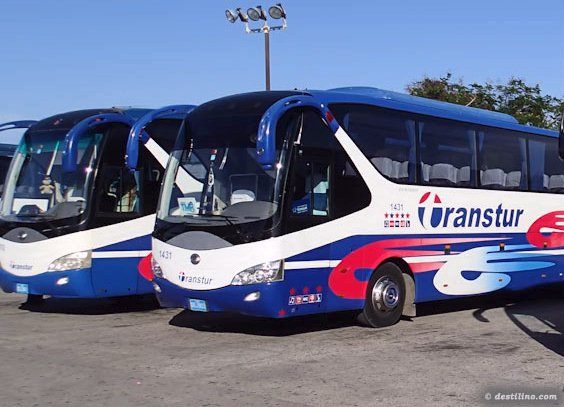
Cliquer ici!To discover this small island, the best way is to rent a Jeep or a scooter for a day. Visit our section transportation to know more about transporation available in the island.

General informations about Cuba

Geography:

The Republic of Cuba is formed by the island of Cuba (the biggest island of the Carribean) and the island of Pines (called Isla de la Juventud since 1976) and of several other small islands. It is located in the North of the Carribean, in the confluence of the Caribbean Sea, the Gulf of Mexico and the Atlantic Ocean.

Population:

Cuba is the second island the most populated in the Carribbean. Hispanola being the first with her 11 395 000 inhabitants (in 2007). The island was a Spanish colony from 1492 till 1898. The Cuban culture results some mixture between the Spanish and African culture.

Capital:

Habana (3 millions).

Area:
Click here!

110,861 km2. The biggest island of the Carribean. 5746 km of coast with more than 4,200 small islands called " Cayo ".

Language:

Spanish, but english is generally understood and spoken by the hotels staff and by most of the entertainers. Some also understand and speak German, Italian or French.

Time zone:

Cuba is in the Eastern Standard Time zone (GMT -5).
Here is the local time at Cayo Largo...

Currency:
Click here!

The official currency is the Cuban peso. For tourists, there are the pesos convertible. The exchange rate of the convertible pesos has been fixed to 1.08x USD currency. If you decided to bring USD currency (cash) in Cuba, you will have to pay a penalty of 10% for bringing USD in the island.

If you pay by credit cards, the amount in CUC will be multiplying by 8% (exchange rate CUC/USD) plus 3% (administration fee). For example : your excursion costs 100 CUC, on your credit card receipt, you will see (100*1.08*1.03) 111.24 USD because CUC is not an international currency and all transactions are in USD.

Click HERE to see the current exchange rate (be patient this website is very slow!)

Electricity:

Gran Caribe hotels: 110 Volts
Sol Cayo Largo, Sol Pelicano and Barcelo hotels:

  • In the rooms: 220 Volts
  • In the bathrooms: 110 or 220Volts
    (this is for low watt electrical appliance only).

  • The sockets can accept both flat and round pins.

    Required documents:
    Click here!

    A valid Passport and a temporary tourist card. This card will be given to you aboard the aircraft going to Cuba or at the tour operator's desk at the airport. It's mandatory for everyone to fill out this card and present it to the cuban custom officer when arriving & leaving Cayo largo. Visa is valid for a period of 90 days at Cuba.

    Be sure to have in hands your Cuban Tourist Card (Visa) before you go the custom. Take your time to fill-out the tourist card correctly because the custom may refuse a card with erasures. If it is the case, you will have to buy a new one for 15 CUC. Do not worry, they will not send you back to your country!

    Click HERE or the thumbnail to see an example on how you have to fill out the Cuban Tourist Card.

    Your passport has to be valid for the duration of your trip + one day. If your country does not have an embassy in Cuba, your passport has to be valid for 60 days after your leaving date.

    Departure tax:
    Click here!

    25 CUC (Peso convertible) payable at the airport in cash only. No credit cards will be accepted. You have to pay the departure tax BEFORE you go to the customs.

    Airport:
    Click here!

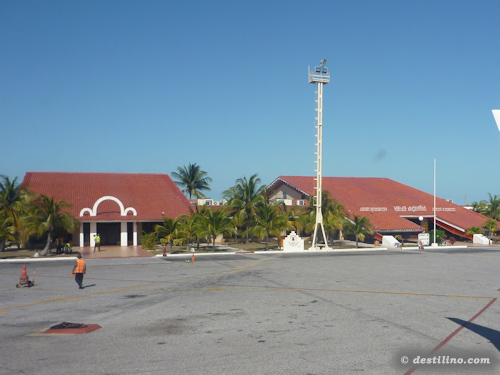
    The airport at Cayo Largo (CYO) Vilo Acuña is located about 10 minutes from the hotels. It is the second in Cuba after the airport Jose Marti in Havana for its landing strip. Boeing 747 may land at Cayo Largo (flight from Italy). Passed the custom, you may find a bar, souvenirs shop, coffee, rum, bathroom, etc. In the smoking area, you can buy drinks, alcohol and foods.

    The Tour operators representatives offer a VIP service for 20 CUC (transfer, faster check-in, private salon, open bar, lunch, etc.) payable to the representative at destination anytime before your flight leaves.

    Cuisine:

    Chicken, pork, fish, pasta, pizza and seafood. Lobsters and shrimps are available for 20 and 15 CUC respectively upon reservations at your hotel's restaurants.

    Shopping:

    Rum (Havana Club is the most popular), cigars, CDs of Cuban music, coffee (Cubita is very good, whole beans and ground), artcrafts, etc. There are small boutiques on the island. They open from 9h to 21h.

  • Tienda Sol Cayo Largo (phone: 24 8122)
  • Tienda Sol Pelicano (phone: 24 8124)
  • Tienda Isla del Sur (phone: 24 8123)
  • Tienda Barceló Cayo Largo (phone: 24 8121)
  • Tienda Bucanero (village) (phone: 24 8131)
  • Tienda Playa Sirena (phone: )
  • Tienda Airport (phone: 24 8125)
  • Gifts for Cubans:

    Try not to give all your gifts you brought only at the hotel (maids, barmans, waiters, etc.). Workers who do not have the chance to work with tourists will be so happy to receive gifts. If you do not plan to leave the hotel during your stay, have a thought for gardeners, cleaners, mecanics, etc. these people work hard to make your stay enjoyable.

    Click HERE to see a list of gift made by Sophie (in French). You will find a lot of useful items for Cubans!

    National hollidays:

    Jan. 1st — New year's day and Liberation Day.
    Jan. 28th — Jose Marti day.
    Feb. 24th — Celebration of the Revolution of 1895.
    Mar. 8th - International woman's day
    Mar. 13th — Attack of the presidential palace.
    Apr. 19th — Victory at Pigs Bay.
    May 1st — International Workers' Day
    Jul. 25th, 26th et 27th — Day of National Rebelliousness
    July 30th - Day of the martyrs of the revolution
    Oct. 8th — Anniversary of the death of Che Guevara
    Oct. 10th — Beginning of the Wars for Independence
    Oct. 28th - Anniversary of the death of Camillo Cienfuegos
    Nov. 27th - Anniversary of execution of students in 1871
    Dec. 7th - Anniversary of the death of Antonio Maceo
    Dec. 25th - Christmas

    National flag:

    Cuban National Flag

    It was designed in 1848 for the liberation movement, which sought to detach Cuba from Spain. The flag was briefly hoisted in 1850 at Cardenas but was not officially adopted until 1902, when independence was granted by the US.

    The blue stripes refer to the three old divisions of the island; and the two white stripes represent the strength of the independent ideal. The red triangle symbolizes equality, fraternity and freedom, as well as the blood shed in the island's struggle for independence. Finally, the white star symbolizes the absolute freedom among the Cuban people.

    National bird:
    Click here!

    The Tocororo or Cuban trogon (Priotelus temnurus). Autochthonous bird related to the quetzal. The Tocororo's feathers exhibit the colors of the Cuban flag: red, blue and white.

    National tree:
    Click here!

    The Royal Palm. Although it is not indigenous of Cuba, it is present in the country's whole landscape and symbolizes the undeniable character of the Cuban people, as it endures the most furious gales on foot, without falling.

    In most cases, its height varies between 40 and 50 feet and it is crowned with a beautiful crest. This is one of the many trees that grow in Cuba; its majestic structure and height, as well as its strength and its many uses have earned it to be called all over the country as the queen of our fields.

    National flower:
    Click here!

    The White Mariposa or Butterfly Jasmine(Hedychium Coronarium Koenig). An endemic jasmine species used by the Cuban women in the wars of independence to pass messages to the battlefields. It symbolizes purity, rebelliousness and independence.

    It grows in humid places as banks of rivers and lagoons, but it is also cultivated in yards and gardens of many Cuban houses.

    National cocktail:
    Click here!

    Mojito, a cocktail well-known in Cuba. The favorite cocktail of Ernest Hemingway. Click HERE if you want to know the recipe of this delicious cocktail.

    Some of the infos on this page come from Wikipedia and DT Cuba.

    Visit the section Things to know to know more about Cuba and Cayo Largo.


    Language:

    Spanish


    Currency:

    Convertible Peso (CUC)


    Required documents:

    Valid passport + tourist card


    Departure tax:

    25 CUC


    Few links that you might find interesting...

    Things to know
    Bulletin board
    Search engine
    Our photo albums
    Happy tourists list
    Trip reports
    Our travel websites
    Taxi, Scooter & Jeep
    Interesting websites
    Hurricanes
    History of cayolargo.net
    Amigos 2001-2004
    Sitemap


    Home Bulletin board Photos and videos Updates Contact
    Copyright © 2000-2009 cayolargo.net